
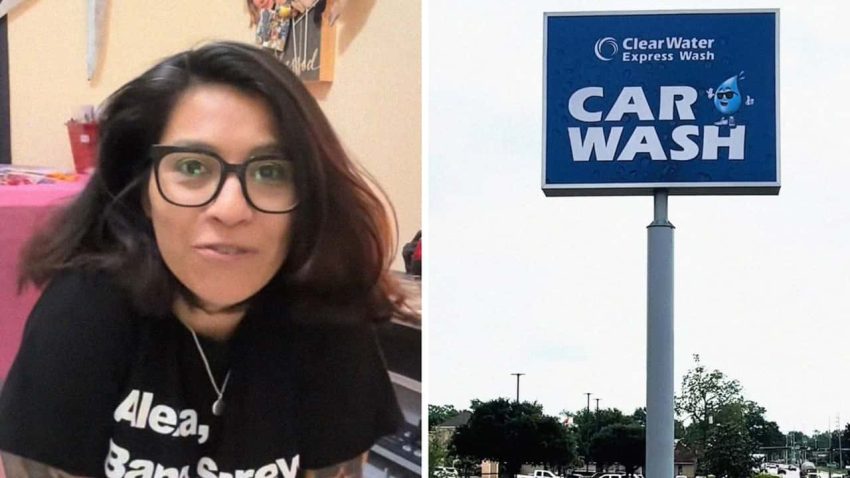
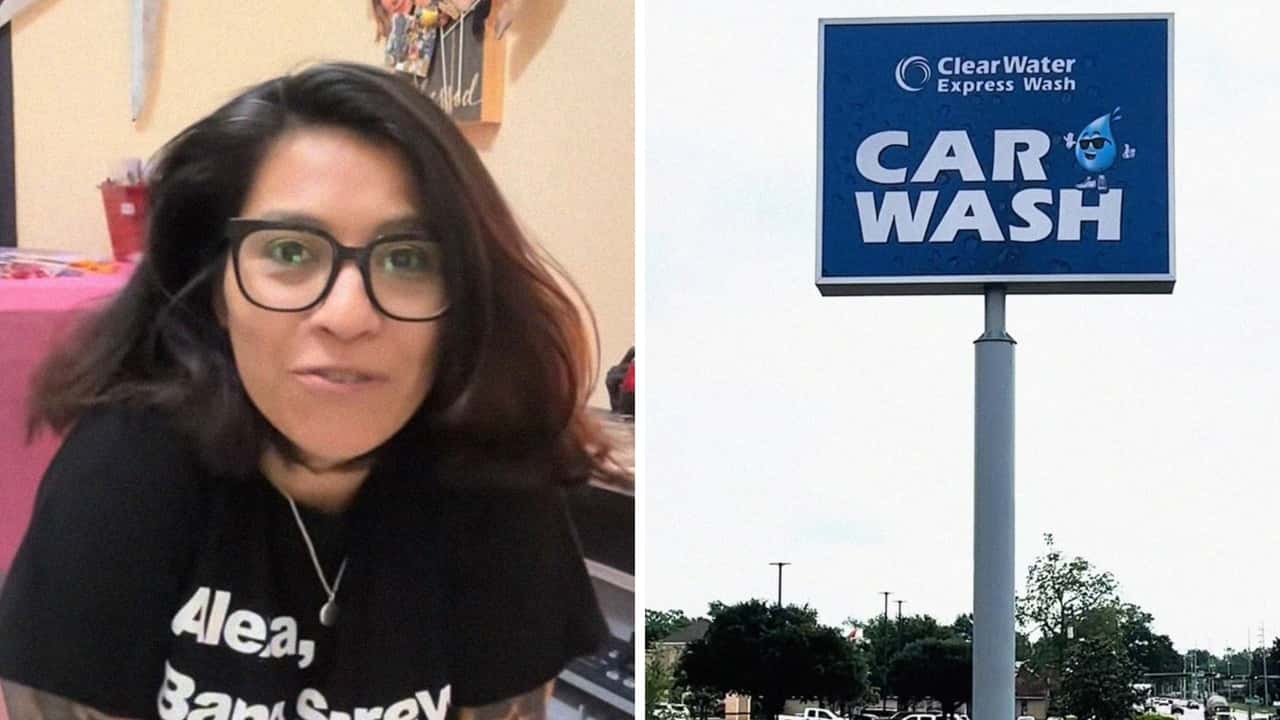
A frustrated Texas couple took their car wash dispute to the streets this week after claiming a Katy-area business damaged their vehicle and refused to make things right. The small but vocal protest outside ClearWater Express Wash has struck a chord with viewers who’ve shared similar experiences with automatic car wash chains.
Marissa (@m2j2love) posted the 29-second TikTok video on Dec. 10. The clip garnered more than 39,000 views and sparked a heated discussion about car wash liability and customer rights. The post has since been deleted.
The video captures her husband’s heated exchange with what appears to be a ClearWater Express Wash employee. “My vehicle, taken into your car wash, it came out [expletive] up and damaged,” he says in the footage. “It was in pristine condition before that. We’ve taken very good care of that [expletive] car.”
According to the man’s account in the video, his vehicle emerged from the wash with a damaged flap “hanging out of the section.” The couple claims the car wash refused to take responsibility for the alleged damage, prompting their roadside demonstration.
Why Car Wash Damage Claims Are Complicated
While the specifics of this couple’s case aren’t fully clear from the video, car wash damage disputes are notoriously difficult to resolve. All car washes, regardless of type, post prominent signs disclaiming liability for vehicle damage. These disclaimers are standard industry practice and generally legally binding in most states, with liability waivers upheld in 46 U.S. states as of 2022.
However, as Marissa pointed out in the comments, many car wash liability waivers include language stating they will compensate for damages “THEY ARE RESPONSIBLE for.” This creates a gray area where customers and businesses may disagree about whether damage was pre-existing or caused by the wash process. Legal experts note that disclaimers don’t automatically absolve a company of its responsibility to operate safely and maintain equipment properly, especially in cases involving negligence or equipment malfunctions.
Automatic car washes use rotating brushes, high-pressure water jets, and chemical solutions that can potentially damage loose trim pieces, antennas, spoilers, or vehicles with existing paint or body issues. Industry sources confirm that brushes in automatic car washes can damage antennas, side mirrors, and loose trim, particularly when equipment isn’t properly maintained. The mechanical nature of the process means that items not properly secured or already compromised can be affected during the wash cycle. Professional detailers consistently warn that automatic car wash brushes can trap dirt and debris from previous vehicles, which then acts like sandpaper against subsequent cars’ paint surfaces.
Community Response Reveals Widespread Issues
The comment section of Marissa’s video became a forum for others sharing similar experiences with ClearWater Express Wash and other car wash chains. Multiple viewers reported experiencing damage at the same location.
“This car wash messed up my husband’s car as well!” wrote user Laur, earning 46 likes on her comment.
Another commenter, Chrissy, reported, “This car wash also damaged my car and refused to do anything and said it was like that already.”
Anonymous user9831548100818, who described themself as a former employee of the car wash, said of the company’s alleged process, “I used to work at that location. They are supposed to make an incident report, and the manager sends it to corporate. They are the ones that decide if they will fix it.”
Legal Realities vs. Customer Expectations
Several commenters debated the legal implications of car wash liability waivers. One argued the traditional position, “There is a whole disclaimer AS YOU DRIVE IN. The car wash is NOT responsible for any damage to the vehicle. You KNEW the risk, taking it in there.”
StormyCloud Inc. countered, “Just because they put a sign doesn’t make it legal.”
The reality is more nuanced. While liability waivers are generally enforceable, they don’t necessarily absolve businesses of responsibility for negligence or equipment malfunctions. If a car wash knew their equipment was dangerous and continued to use it anyway, or if the waiver language is too vague, the waiver may not protect the business. Customers may still have recourse through small claims court or insurance, especially if they can prove the damage occurred during the wash process.
One user offered practical advice, writing, “Most car wash actually have cameras in the wash area to monitor the staff and your vehicles. Get you a lawyer. They had to fix my car after reviewing the tape.”
This advice aligns with widespread industry practices. Many car washes install high-definition cameras at entrance and exit points to document vehicle condition and protect against fraudulent claims.Video surveillance footage can be crucial evidence in small claims disputes, though customers may need legal assistance to obtain it if the car wash refuses to provide access.
The incident appears to reflect broader issues with automated car wash chains. Multiple commenters shared experiences of damage from various locations and brands.
J.Rene’ offered professional insight: “My husband is a mobile detailer he always says, ‘Want to mess your car up or scratch up your paint? Go into a car wash.'”
These concerns echo widespread warnings from automotive care professionals who note that touchless car washes present significantly lower risk of paint damage than brush-based systems, though they may use stronger chemicals. Hand washing by professionals or careful DIY methods remains the safest option for preserving vehicle paint, though it requires more time and effort than automated alternatives.
The Protest Approach
While most customers would pursue traditional complaint channels, this couple’s decision to stage a public protest reflects growing frustration with corporate customer service responses. Their approach appears to have generated community support, with local users reporting that they witnessed the demonstration.
Angie reported, “I saw them while I was passing omg!!” Marissa responded enthusiastically, “It was the best time being out there!”
Some viewers offered additional support. Kat C commented, “I’ll be in town later this week if you need more protestors. I’ll give you guys an hour or two of protesting power because this is BULL[expletive]! Consumers deserve BETTER THAN THIS!!”
What Customers Can Do
For car owners facing similar situations, experts generally recommend:
Documenting vehicle condition before entering any car wash with photos and video;
Understanding that liability waivers don’t cover all situations, particularly negligence;
Filing incident reports immediately if damage occurs to create a paper trail;
Requesting security camera footage from the facility as soon as possible, as recordings are often stored for limited periods;
Considering small claims court for significant damages, with the understanding that the burden of proof rests on the plaintiff; and
Contacting state consumer protection agencies for guidance on local laws.
The incident also highlights the importance of choosing car wash facilities carefully. Touchless automatic washes generally present a lower risk for vehicle damage than brush-based systems, though they may not clean as thoroughly. Hand wash services or careful DIY washing remain the gold standard for protecting vehicle finishes, according to automotive care professionals.
While the ultimate resolution of this couple’s dispute remains unclear, their public protest has undoubtedly raised awareness about car wash liability issues. The video’s viral reach has prompted discussions about corporate responsibility and customer rights in the automotive service industry.
Motor1 reached out to Marissa via TikTok direct message and to ClearWater Express Wash via their website contact form. We’ll be sure to update this if either responds.